
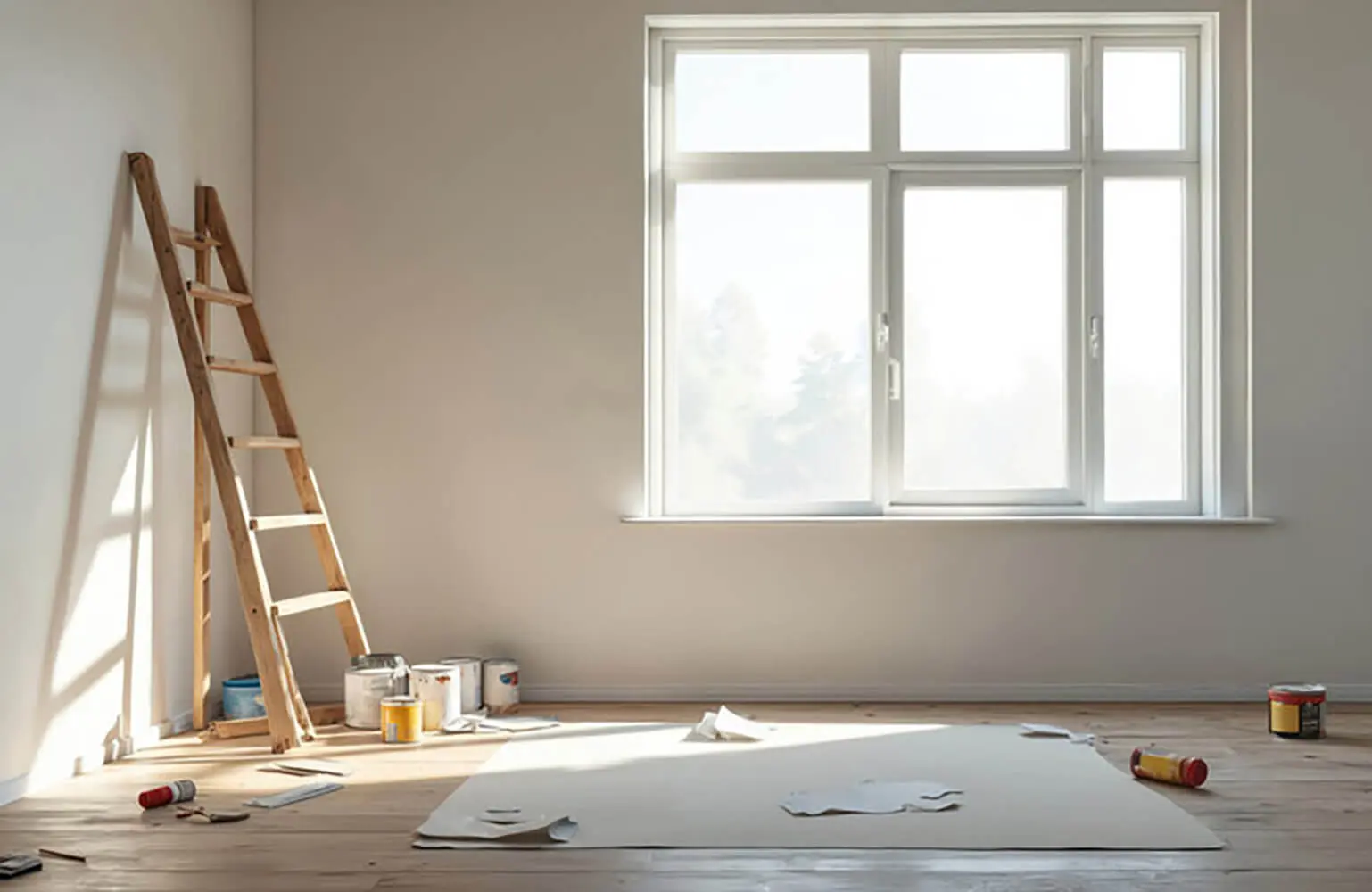
Planning an interior painting project almost always starts with the same question: how long does an interior painting project take? Homeowners ask this because painting isn’t just a cosmetic update. It affects daily routines, furniture placement, pets, work-from-home schedules, and sometimes move-in or listing timelines.
What makes this question tricky is that there isn’t a single, universal answer. Two projects that seem similar on the surface can take very different amounts of time once you factor in the home itself, the scope of work, and how the space is being used during the project. That uncertainty is often more stressful than the painting itself.
This guide is designed to remove some of that guesswork. Instead of vague estimates or best-case scenarios, it explains what a normal interior painting timeline looks like for most homes and why that timeline can shift. The goal is to help you understand what’s realistic, what’s variable, and how to think about the duration of your own project in a practical way.
With a clearer picture of how interior painting projects are timed, planning becomes easier and expectations stay grounded from the start.
Typical Interior Painting Timelines for Most Homes
For planning purposes, most interior painting projects fall into a few broad timeline ranges. These ranges give homeowners a baseline expectation before any project-specific details are considered.
A single room is usually the shortest and most straightforward project. In many homes, painting one bedroom, office, or living room can take one to two days. This typically includes surface preparation, painting the walls, and allowing enough drying time between coats to keep the finish consistent.
Projects that include several rooms naturally take longer. Painting multiple bedrooms, a hallway, and shared living spaces often spans three to five days. The timeline increases as painters move between rooms, protect adjacent areas, and maintain consistent finishes throughout the home. Trim, doors, and ceilings also start to play a larger role at this stage.
A full interior repaint is the most time-intensive option. For an average-sized home, this type of project commonly takes one to two weeks. This range accounts for painting all walls, ceilings, trim, and doors while managing drying times and minimizing disruption as work moves room by room.
These timelines are best viewed as planning ranges, not guarantees. They reflect what many homeowners experience under normal conditions, with professional preparation and proper drying time built in. Once these baseline expectations are clear, it becomes much easier to understand why some projects move faster and others take longer.
Why The Size And Layout Of The Project Changes The Timeline
Once you have a baseline timeline in mind, the size and layout of the project are usually the first things that push that range longer or shorter. This goes beyond simple square footage and comes down to how the space is arranged and detailed.
Each additional room adds setup and transition time. Painters need to protect floors and furniture, cut in edges, apply paint evenly, and clean up before moving on. Even small rooms take time when that full process is repeated.
Ceiling height and architectural features also affect pacing. Higher ceilings, stairwells, and open foyers require ladders or scaffolding and more careful work. Homes with detailed trim, crown molding, built-ins, or many doorways naturally take longer than spaces with simpler finishes, and understanding interior vs exterior paint differences can clarify why some surfaces demand more time.
Layout plays a role as well. Open floor plans can sometimes allow for smoother progress because painters can work continuously. In other cases, large open areas require more coordination to keep coverage and drying consistent, which can slow things down.
These layout and size details don’t change the goal of the project, but they do influence how long it takes to complete. That’s why two homes of similar size can end up with very different interior painting project durations.
How Wall Condition And Prep Work Stretch Or Shorten The Schedule
After project size and layout, wall condition is the factor most likely to push an interior painting timeline longer than expected. Prep work happens before any paint goes on the wall, and it often takes more time than homeowners anticipate.
Common prep-related factors that affect how long interior painting takes include:
- Wall damage such as nail holes, dents, cracks, or previous repairs that need to be smoothed out
- Uneven surfaces that require sanding to ensure the paint finishes evenly
- Stains from water, smoke, or pets that need special primers before painting
- Dark or glossy existing paint that requires extra preparation for proper adhesion
Each of these issues adds steps to the process. Repairs must dry before sanding. Primer needs time to set before paint can be applied. Rushing these steps usually leads to visible flaws later, which is why professionals build this time into the schedule.
Homes with clean, smooth walls often stay closer to the shorter end of the interior painting timeline. Homes with visible wear or problem areas tend to move toward the longer end of the range. Prep work doesn’t change the final look when done correctly, but it plays a major role in how long the project takes from start to finish.
Where Drying And Curing Time Fits Into The Overall Timeline
Drying and curing time is built into a professional interior painting schedule, even though it can feel like nothing is happening during these periods. Paint needs time to set properly between coats, and that waiting time is part of what protects the final finish.
There’s an important difference between paint feeling dry and being ready for the next step. Paint may be dry to the touch within hours, but that doesn’t always mean it’s ready to be recoated or handled. Applying paint too soon can lead to streaking, uneven sheen, or poor adhesion.
Several conditions influence how long drying and curing take:
- Temperature inside the home
- Humidity levels
- Airflow and ventilation
- The type of paint and finish being used
Even when faster-drying paints are used, these factors still matter. Cutting drying time too aggressively often creates problems that slow the project down later.
Drying time also affects when rooms can be used again. Light foot traffic may be fine sooner, but reinstalling hardware, moving furniture back, or closing doors too early can damage fresh paint. That’s why curing time is considered part of the interior painting project duration, not an optional add-on.
How Living In The Home Affects Pacing And Scheduling
Whether the home is occupied during the project has a noticeable impact on how quickly work can move. Painting around daily life requires more coordination and often adds time compared to working in an empty space.
In occupied homes, painters have to work around furniture, personal items, and routines. Rooms may need to be completed in stages so homeowners can continue using parts of the house, which naturally slows the overall pace. Effective interior painting prep tips help you prepare ahead of time for smoother progress.”
Common living-in-the-home factors that affect the interior painting timeline include:
- Furniture that needs to be moved, protected, and repositioned multiple times
- Pets that require doors to stay closed or rooms to be finished in a specific order
- Children’s schedules, nap times, or school routines
- Work-from-home needs that limit noise or access during certain hours
Vacant homes allow painters to work more continuously and efficiently because there are fewer interruptions and no daily resets. That doesn’t mean occupied homes can’t be painted smoothly, but it does mean the schedule often prioritizes livability over speed.
These lifestyle considerations don’t affect the quality of the finished paint. They simply influence how the work is paced day to day, which is why two similar projects can have different interior painting project durations based on how the home is being used.
How Professionals Turn These Variables Into A Reliable Estimate
Once all the timeline modifiers are understood, the next step is turning them into a schedule that actually holds up in real life. This is where professional estimating makes a difference compared to rough guesses or online calculators.
Experienced painters rely on in-person walkthroughs because many timeline factors aren’t visible on paper. They’re looking at wall condition, ceiling height, trim detail, access points, and how the home is lived in day to day. These details help determine how much prep is needed, how rooms should be sequenced, and where natural pauses for drying and curing will occur.
A reliable estimate also accounts for workflow, not just labor hours. Professionals plan the order of rooms, how many painters are needed at each stage, and how to minimize downtime between steps. This is why estimates that seem longer upfront often lead to smoother projects with fewer delays.
Clear communication is part of the process as well. When homeowners understand what’s included in the timeline and why, there’s less frustration if certain steps take time. The goal isn’t to promise the fastest completion possible, but to set a schedule that reflects how long interior painting actually takes when it’s done correctly.
How To Interpret The Timeline For Your Own Interior Painting Project
At this point, the timeline ranges should feel more grounded and easier to apply to your own home. The key is to treat those ranges as a framework rather than a fixed promise. The closer your home matches the baseline assumptions, the more accurate those timelines tend to be.
Start by thinking about where your project falls within the range. A home with simple layouts, smooth walls, and flexible access usually lands toward the shorter end. A home with detailed trim, visible wear, higher ceilings, or an active household often moves toward the longer end. Neither scenario is better or worse. They just require different planning expectations.
It also helps to think beyond total days and consider disruption. A project that takes longer but is carefully staged room by room can feel easier to live with than a faster project that shuts down large portions of the home at once. Understanding how the work will be paced can matter just as much as the final completion date.
If you’re planning an interior painting project and want a clear, realistic timeline for your home, Marsh Paint Co can help. We take the time to evaluate your space, understand how your home is used, and build a schedule that reflects the actual scope of the work.
When you work with us, you get clear expectations from the start and a process designed to minimize disruption while delivering a finished result you can feel confident in. Reach out to us to schedule an interior painting consultation and get a timeline that fits your home and your plans.