
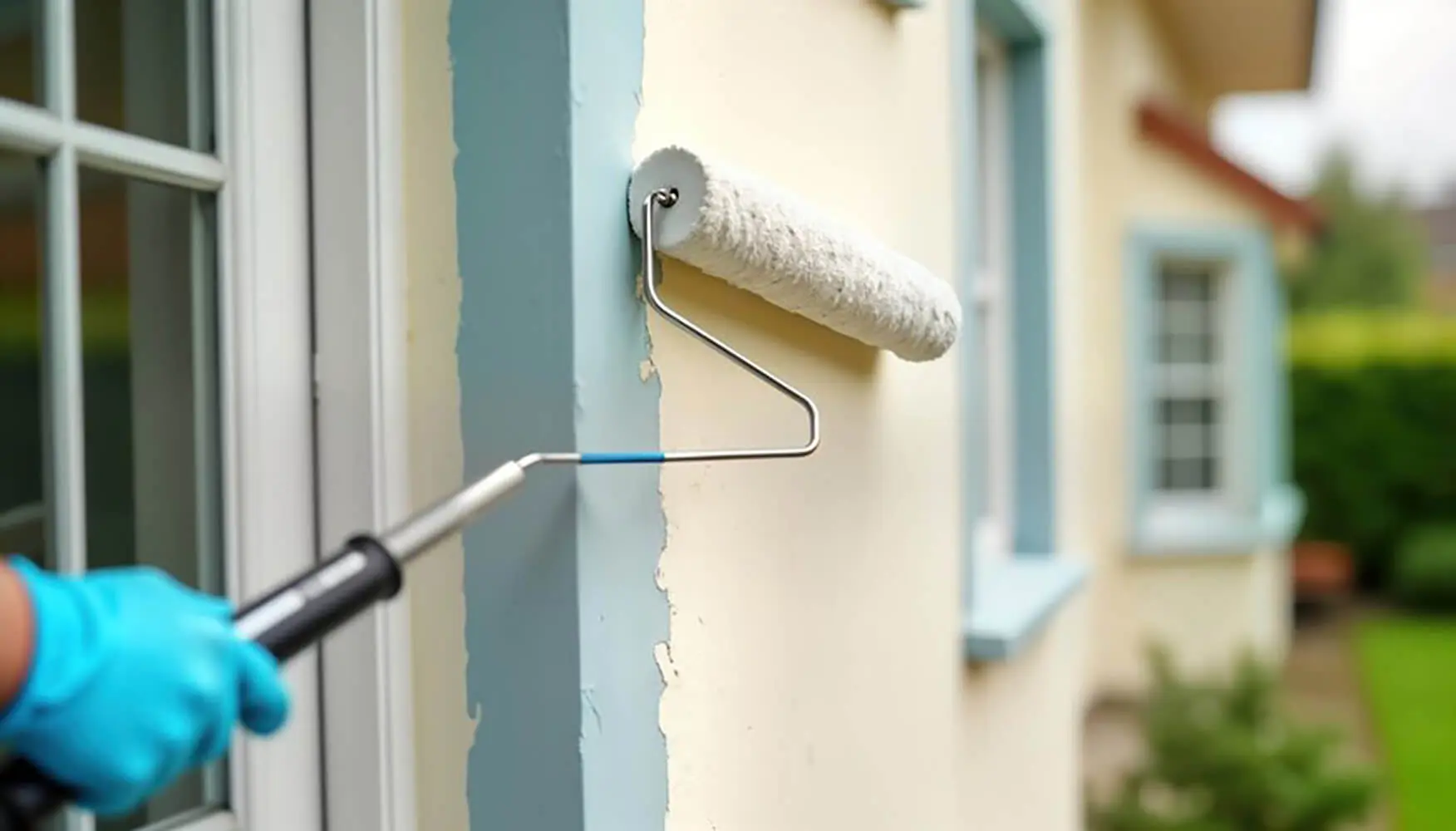
If you’re wondering how long exterior house paint lasts, you’re probably asking because your home is starting to show it. Maybe the color looks faded. Maybe you’re seeing chalky residue on the surface. Or maybe certain areas are peeling and you’re not sure if it’s normal aging or a sign something’s wrong.
Palm Bay weather can be tough on exterior paint. Between intense sun, heat, humidity, heavy rain, and storm season, homes here deal with a lot more wear than a “national average” repaint timeline would suggest.
The goal isn’t to repaint too early, but it’s also not worth waiting until the paint stops protecting the home. Once paint starts failing, moisture can work its way into the surface underneath, and that’s when repairs become more expensive.
This guide will set realistic expectations for Palm Bay, explain why some homes wear faster than others, and help you spot the difference between paint that just looks tired and paint that’s actively failing. That way you can make the right call on when repainting is actually necessary.
How Long Exterior Paint Usually Lasts in Palm Bay
Most homeowners want a simple number, but the realistic answer is a range. In Palm Bay, exterior paint typically lasts about 5–10 years, depending on surface type, exposure, and the quality of the last paint job.
Some homes can go longer, especially if they have good shade coverage and a high-quality paint system underneath. Others start showing real wear sooner, especially on sun-heavy sides or areas that stay damp.
The reason there isn’t one universal number is because a few big factors change everything:
- Different materials hold paint differently – Stucco, masonry, wood, and trim don’t wear at the same pace, even on the same house.
- Sun exposure isn’t equal on every wall – One side might get direct sun all afternoon, while another stays shaded most of the day.
- The last paint job may not have been done with proper prep – Skipping prep and priming can shorten lifespan fast, even with good paint.
It also helps to understand a key difference that trips people up.
Paint can look tired before it’s actually failing. Fading and slight dullness can be cosmetic, especially in bright sun. The home may still be protected even if the finish doesn’t look “fresh.”
Paint that’s failing is different. Once you’re seeing peeling, cracking, bubbling, or heavy chalking, the coating isn’t sealing the surface the way it should.
That’s why the “how long” question isn’t just about appearance. It’s about whether the paint is still doing its job as a protective layer around your home.
Why Paint Breaks Down Faster in Palm Bay (And Why One Side Always Goes First)
If you’ve ever looked closely at your home and thought, “Why does that side look worse than the rest?” you’re not imagining it. In Palm Bay, exterior paint almost never wears evenly.
Local weather and exposure patterns usually hit certain sides of the home harder, which is why one wall often fades, chalks, or peels long before the others.
The biggest wear factors in Palm Bay include:
- Strong UV and heat stress – Sunlight breaks paint down over time, especially on walls that get direct afternoon sun. Heat can also cause surfaces to expand and contract, which puts extra stress on the coating.
- Humidity and lingering moisture – Even when it isn’t raining, moisture sticks around here. Morning dew, shaded areas, and humid air can keep siding damp longer than homeowners expect.
- Repeated wet/dry cycles during storm season – Rain hits, surfaces soak, then everything dries out again… over and over. That constant cycle wears paint down faster, especially when the surface lacks proper sealing.
- Wind-driven rain – Some sides of the home take more direct rain exposure, especially during storms. That extra moisture can speed up breakdown.
Here’s why direction matters so much:
- South and west-facing sides usually fade and “bake” faster – These walls take the strongest sun and the most heat stress, which can dull paint and break it down sooner.
- North-facing sides often stay damp longer – Less sun means slower drying. These areas are more prone to mildew, algae staining, and moisture-related wear.
Shade and landscaping can change the equation too. Heavy shade can keep walls cooler, but it can also trap moisture and slow drying after rain, especially near shrubs or dense plants.
And it’s not just siding that shows wear first. Trim, fascia, soffits, and doors often age faster because they’re more exposed, have sharper edges, and take more contact and weather stress than large flat walls.
Why Stucco, Wood, and Trim Don’t All Hold Paint the Same Way
Even on the same house, different surfaces can age at totally different speeds. That’s because paint doesn’t behave the same way on stucco, wood, and trim.
In Palm Bay, stucco and masonry surfaces often hold paint longer than exposed wood areas. They’re more stable, they don’t expand and contract as dramatically as wood, and they tend to resist visible wear better over time.
That doesn’t mean they last forever, but they usually age more gradually.
Wood and trim tend to need repainting sooner. These areas take more direct exposure, and the surface itself is more vulnerable to moisture and movement.
Common examples include:
- Fascia boards and soffits
- Window and door trim
- Garage doors and entry doors
- Decorative wood features and porch posts
Trim also has more edges, seams, and joints, which are natural weak points for paint. Once caulking cracks or gaps open up, moisture can sneak in and speed up failure quickly.
Surface condition matters just as much as material. Even stucco won’t last if the last paint job was applied over weak layers or poor adhesion.
Paint lifespan drops fast when:
- Loose paint wasn’t removed properly
- Primer was skipped on repairs or bare spots
- Caulking is failing around seams and joints
- Moisture can get into small cracks before the paint can seal it
This is why many homes don’t “need repainting everywhere” at the same time. Often it starts with trim, fascia, and high-exposure wood areas first, while other surfaces still look decent and remain protected.
The Signs Exterior Paint Is Failing (Not Just Looking Old)
Fading and dullness can be normal over time, especially in Palm Bay sun. But there’s a point where paint stops being cosmetic and starts becoming a real protection issue.
The easiest way to tell the difference is to look for signs that the coating is no longer sealed and stable.
Here are warning signs homeowners shouldn’t ignore:
- Peeling, flaking, or lifting paint – This is one of the clearest signs the paint is no longer bonded well. Once it starts peeling, moisture can get underneath and spread the problem.
- Bubbling or blistering – Blisters often mean moisture is trapped under the paint film. It can also happen when surfaces were painted before they were fully dry.
- Chalking that rubs off on your hand – If you touch the surface and get a powdery residue, the paint is breaking down from UV exposure. Heavy chalking can make it harder for new paint to adhere without proper prep.
- Cracking around trim, corners, and joints – Cracks often show up where surfaces move most. They can also signal failing caulk or seams that are letting water in.
- Mildew or algae staining that keeps returning – If stains keep coming back quickly after cleaning, it may mean the coating isn’t resisting moisture the way it should anymore.
These signs matter because once paint stops sealing the surface, damage underneath can accelerate. Moisture intrusion can cause wood to swell or rot, caulking to fail faster, and repairs to become more expensive.
In other words, paint doesn’t just make the house look good. It’s part of what protects the exterior materials. When the coating starts failing, it’s usually smarter to act sooner rather than waiting for the damage to spread.
What Makes a Paint Job Last Longer the Next Time
If your home needs repainting, the goal isn’t just to make it look fresh again. It’s to get a finish that holds up as long as it should in Palm Bay conditions.
Most of the difference comes down to three things: prep, product choice, and how the paint is applied.
Prep is the foundation. A thorough wash removes chalky residue, mildew buildup, and dirt that can stop paint from bonding properly. Painters need to scrape and sand loose paint instead of painting over it, because new paint won’t last on a weak layer.
Primer matters too, especially on repairs, bare spots, stained areas, or surfaces with uneven absorption. Skipping primer can lead to early peeling, uneven coverage, or flashing where patches show through.
Product choice is the next piece. Palm Bay homes deal with strong UV and heat stress, so coatings need to hold up on high-sun exposures. Moisture-prone or shaded sides benefit from paint systems designed to resist mildew and handle lingering humidity.
Application quality is the final piece. Paint needs the right dry time between coats, and coverage needs to be consistent across the surface.
A few details that make a big difference:
- Proper dry time so the coating can cure correctly
- Even coverage with no thin spots
- Sealed edges and clean transitions, especially around trim and joints
When all three parts are handled properly, professional exterior painting services give your home a much better chance of lasting toward the high end of the typical lifespan range.
When Repainting Is Worth It (And When It Can Wait)
Not every faded exterior needs to be repainted immediately. But in Palm Bay, the line between “cosmetic aging” and “active failure” matters, because moisture and sun can accelerate damage once the coating breaks down.
Repainting soon is usually the smart move when the paint is no longer protecting the surface.
That includes situations like:
- Active peeling, flaking, or lifting paint
- Exposed wood or substrate anywhere on the home
- Widespread chalking that rubs off easily
- Mildew or algae staining that returns quickly after cleaning
In these cases, waiting usually means more prep, more repairs, and stronger reasons to hire a house painter rather than handling a larger problem later.
On the other hand, you may be able to wait a bit longer if the paint is simply showing normal age but still holding.
Examples include:
- Mild fading with no peeling or exposed surface
- Small isolated trim wear that isn’t spreading
- Cosmetic wear that looks tired but isn’t breaking down
A simple way to filter it is this: Is the paint still protecting the home — or is it just changing the look?
If the surface underneath is sealed and stable, you may have time to plan around an exterior house painting timeline instead of rushing into a repaint. If the coating is opening up, cracking, or letting moisture in, it’s usually worth repainting sooner rather than later.
The Bottom Line for Palm Bay Homeowners
So, how long does exterior house paint last in Palm Bay? For most homes, the realistic range is about 5–10 years, but the real answer depends on exposure, surface type, and how well the last paint job was prepped.
Palm Bay conditions are tough on exteriors. Strong sun and heat stress break paint down faster on the south and west sides, while shaded areas often stay damp longer and are more prone to mildew and moisture wear.
That’s why most homes don’t age evenly. One side usually shows problems first, and trim, fascia, soffits, and doors often wear out before the main wall surfaces do.
The biggest takeaway is that paint longevity here isn’t just about color or appearance. It’s about protection. Paint can look tired and still be doing its job, but once you see peeling, bubbling, cracking, heavy chalking, or recurring mildew, the coating may be actively failing.
If you want your next paint job to last as long as it should in Palm Bay, prep and product choice matter just as much as the paint itself. A solid surface, the right coating for sun and moisture exposure, and professional application make all the difference.
If you’re not sure whether your paint is aging normally or starting to fail, Marsh Paint Co. can evaluate your exterior and recommend the smartest next step. Reach out to schedule a free estimate and get clear guidance on whether you can wait or it’s time to repaint.