
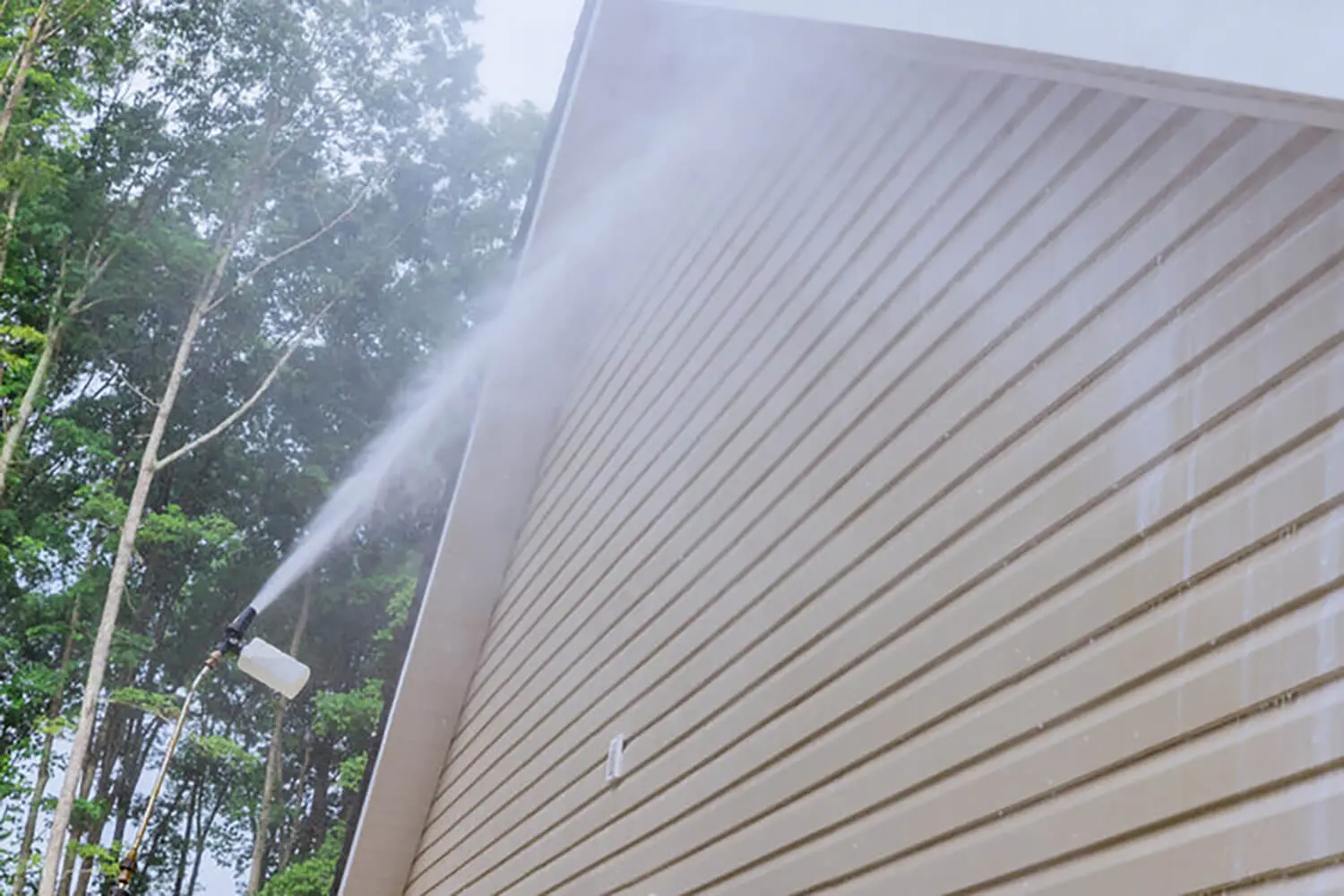
If you’re planning to paint your home’s exterior, you probably have one main goal: you want it to last. Not look great for six months and then start peeling, bubbling, or fading way sooner than it should.
That’s where the pressure washing conversation usually comes up.
Most professional painters will insist on washing the exterior first, and homeowners often wonder if it’s really necessary or just an “extra” step added onto the project. It can feel like something you could skip, especially if the house doesn’t look visibly dirty.
But here’s the truth: pressure washing is one of the biggest reasons exterior paint jobs hold up long-term. It’s not about making the home look cleaner for a day — it’s about giving the paint the surface it needs to bond properly and cure the way it’s supposed to.
In this guide, we’ll break down why pressure washing is needed before exterior painting, what it removes, what problems it prevents, and how it helps your new paint finish stay smooth and durable for years.
Paint Adhesion Starts With a Clean Surface
Most exterior paint jobs don’t fail because the paint itself was “bad.” They fail because the paint never fully bonded to the surface in the first place.
Think of paint like a coating that needs something solid to grab onto. If the surface underneath is dirty, dusty, chalky, or coated in residue, the paint isn’t really bonding to your home.
It’s bonding to the layer sitting on top of it.
That’s the key idea homeowners often miss. If the surface has build-up, the paint sticks to the build-up — and when that layer breaks down, the paint comes with it.
A clean surface gives paint the best chance to:
- Grip properly from the start
- Dry and cure evenly
- Stay smooth instead of gritty or patchy
- Resist early peeling and flaking
This is why pressure washing before exterior painting isn’t just a “cleanup step.” It’s part of the foundation that helps the paint job hold up the way it’s supposed to.
Pressure Washing Gets Rid of the Build-Up That Causes Early Peeling
Even if your house looks “fine” from the street, exterior surfaces collect build-up over time. And that build-up is one of the biggest reasons paint starts peeling earlier than expected.
Common exterior build-up includes:
- Dirt and dust
- Pollen and pollution residue
- Grime in textured areas or under soffits
- Chalky oxidation from older paint breaking down
That chalky residue is a big one. If you’ve ever rubbed an exterior wall and gotten a powdery film on your hand, that’s a sign the old paint is degrading — and new paint won’t bond well over it.
A quick hose rinse usually isn’t enough to remove this. It might knock off surface dust, but it won’t lift bonded grime or fully wash away chalking.
Pressure washing removes that layer so the paint can sit directly on a stable surface. That helps prevent issues like:
- Peeling and flaking
- Patchy coverage
- Rough or gritty texture
- Uneven finish that doesn’t look smooth up close
This is one of the simplest ways exterior painting preparation washing helps the new paint job last longer instead of failing early.
Mildew and Algae Need to Be Removed Before You Paint
Mildew isn’t just an appearance problem. If it’s on the surface and you paint over it, it doesn’t magically disappear — it can keep growing underneath the new coating.
That’s why painters take it seriously, especially in humid climates where moisture hangs around longer.
Mildew and algae tend to show up most in areas like:
- Shaded sides of the home
- Around soffits and trim lines
- Spots with limited airflow
- Areas that stay damp after rain or morning dew
Sometimes you’ll see it as dark staining, and other times it shows up as greenish buildup. Either way, it needs to be removed before primer or paint goes on.
Pressure washing helps clear the surface so the coating can properly seal and protect the home. If mildew is left behind, you may notice it “bleeding through” later — or coming back faster than expected even with fresh paint.
This is one of the biggest reasons why pressure washing is needed before exterior painting: it gives you a clean surface that’s ready to be sealed, not a problem spot that’s being covered up.
Pressure Washing Can Reveal Surface Problems You Don’t Want to Paint Over
One underrated benefit of pressure washing is that it shows you what you’re really working with.
A home can look okay from a distance, but once the surface is clean, issues become much easier to spot — and that matters because exterior paint is only as strong as what’s underneath it.
Washing often reveals things like:
- Loose or peeling paint that needs scraping
- Hairline cracks that need caulking
- Open seams around trim or joints
- Exposed wood or soft spots starting to break down
If those issues stay hidden and you paint over them, the paint job usually won’t last as long as it should. In some cases, it can actually trap moisture and make the damage worse underneath.
The practical win here is the painting timeline. It’s always easier (and cleaner) to handle surface problems before paint goes on than after the new coating starts failing.
So while pressure washing before exterior painting is often viewed as “just prep,” it’s also a way to catch problems early and avoid rework later.
What Happens When You Skip Pressure Washing
When pressure washing is skipped, the paint isn’t bonding to a clean surface — it’s bonding to whatever is already sitting there. And that’s when exterior paint problems show up faster than most homeowners expect.
Some of the most common issues include:
- Peeling or flaking much sooner than expected
- Patchy coverage or a gritty-looking finish
- Rough texture where dirt or chalk was painted over
- Mildew staining returning through the new paint
Even if the paint looks fine right after the job is done, these problems tend to surface within the first year or two when the coating starts dealing with seasonal weather conditions.
The tough part is that once paint starts failing, it usually takes more work to fix the next time. Peeling paint needs scraping. Chalking needs deeper cleaning. Moisture issues often require more prep and priming.
That’s why skipping this step can get expensive. Instead of paying once for a paint job that lasts, you end up repainting sooner — and paying again for the same surface work you could have addressed upfront.
In other words: pressure washing isn’t where you want to cut corners if you care about longevity.
Pressure Washing Is the Step That Helps Paint Last
Pressure washing isn’t about making your home look cleaner for a day. It’s about giving exterior paint the surface it needs to bond properly, cure evenly, and hold up against weather over time.
When the exterior is washed the right way, it helps remove the things that quietly shorten paint life, like grime, chalky residue, mildew buildup, and moisture-trapping debris. It also makes it easier to spot areas that need scraping, caulking, or repairs before paint goes on.
That’s what makes the difference between a paint job that looks good right away… and a paint job that still looks good years later.
The final takeaway is simple: if you want an exterior paint job that lasts, pressure washing is part of the foundation. It’s not an optional extra. It’s one of the most important preparation steps for getting clean coverage, strong adhesion, and long-term durability.
If you’re planning an exterior repaint and want it done right from the start, Marsh Paint Co. can help you confirm what prep your home actually needs, what condition the surface is in, and what it will take for the finished paint to hold up the way it should.